
Afghanistan's Historical Conflicts
The Kite RunnerThe backdrop of Afghanistan's turbulent history from monarchy to Soviet invasion to civil war to Taliban rule.
increasing Bearing strength in each event
 decreasing
Bearing strength in each eventdecreasingThe Coup of 1973
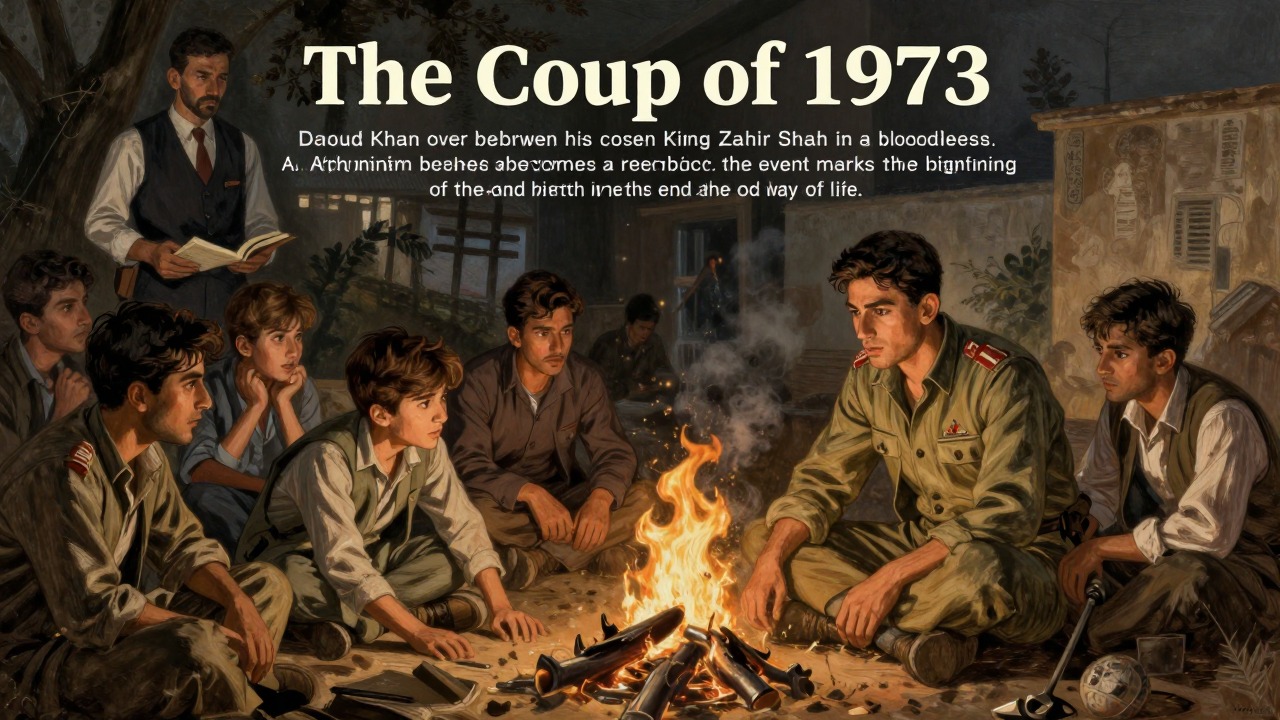
The Coup of 1973
The End of the Monarchy
Daoud Khan overthrows his cousin King Zahir Shah in a bloodless coup. Afghanistan becomes a republic. The event marks the beginning of the end of the old way of life. Amir and Hassan hear gunfire and are frightened.
The New Republic
For a few years, there is a sense of hope. Women's rights are discussed, and modernization is promised. But the underlying tensions remain. The coup sets the stage for the communist takeover and the Soviet invasion.
The Impact on the Characters
The coup emboldens Assef, who sees it as an opportunity to promote his racist ideology. It also foreshadows the violence that will engulf the country. The personal stories of the characters are intertwined with the political upheaval.
The Soviet Invasion and Civil War
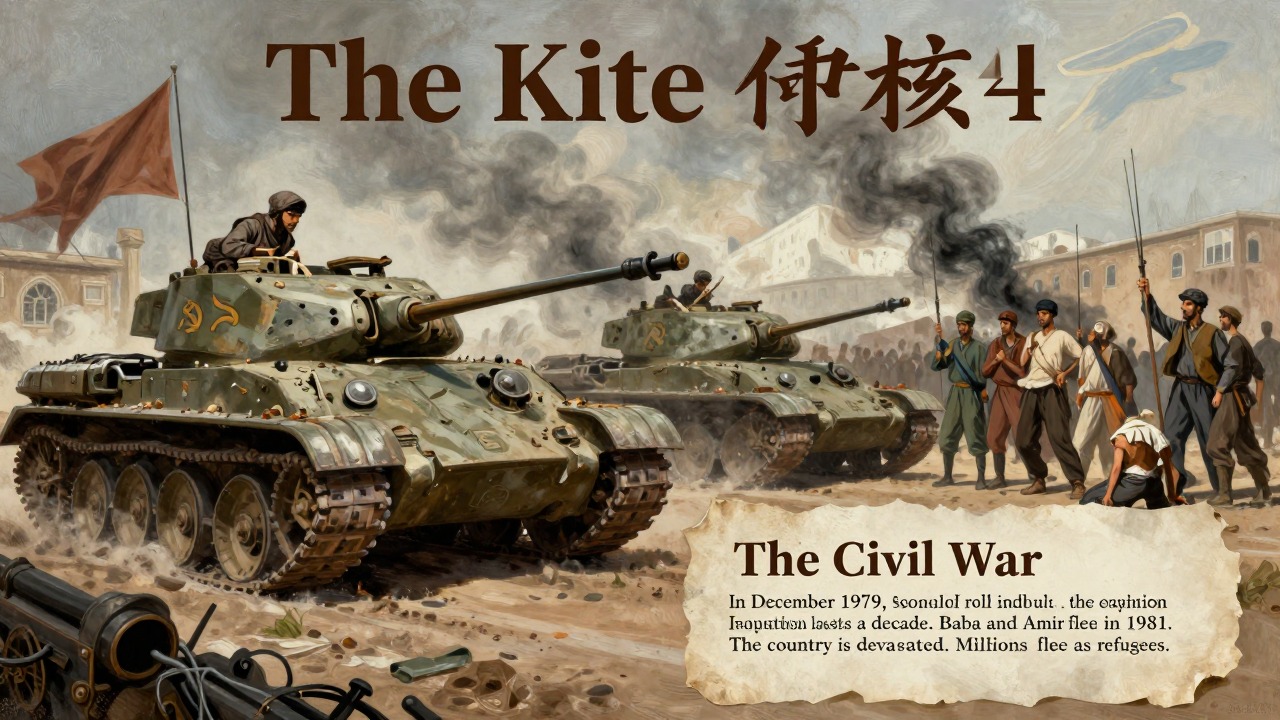
The Soviet Invasion and Civil War
The Invasion
In December 1979, Soviet tanks roll into Kabul. The occupation lasts a decade. Baba and Amir flee in 1981. The country is devastated. Millions flee as refugees.
The Civil War
After the Soviets withdraw, the Mujahedin factions turn on each other. Kabul is destroyed by rocket fire. The orphanage Baba built is destroyed. People live in fear. Rahim Khan describes the horror of sifting through rubble for children's body parts.
The Rise of the Taliban
In 1996, the Taliban take over Kabul. They bring order but at a terrible price. They impose strict Shari'a law, ban kite flying, and persecute Hazaras. The characters' lives are shaped by these events: Hassan is killed by the Taliban, and Sohrab is abused by a Talib commander.
July 17, 1973
1979 to 1996
